
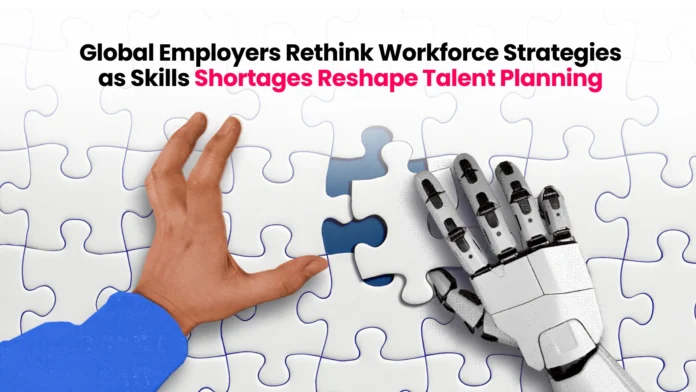
The global talent market is entering a new phase as employers face persistent shortages in specialized skills while technology continues to change the nature of work. Organizations are increasingly moving away from workforce planning based primarily on job titles and headcount toward skills-based strategies that identify what capabilities the business needs and where those capabilities can be developed.
The shift is particularly visible in technology, healthcare, engineering, cybersecurity, advanced manufacturing, and other specialized sectors. Employers are expanding internal upskilling programs, redesigning roles, and using workforce analytics to identify capability gaps before they become barriers to business growth.
Skills Gaps Are Becoming a Strategic Business Issue
The challenge is no longer simply finding enough employees. Employers are struggling to find people with the right combination of technical expertise, digital capabilities, industry knowledge, and adaptable skills.
Organizations are therefore paying greater attention to:
- Critical skills shortages
- Emerging technology capabilities
- Internal talent mobility
- Employee reskilling
- Leadership pipelines
- Workforce productivity
- Skills-based hiring
This is encouraging HR leaders to work more closely with business and technology teams when determining future workforce requirements.
Companies Are Expanding Internal Talent Development
Instead of relying exclusively on external hiring, organizations are increasingly looking within their existing workforce to close skills gaps.
Internal mobility programs can help employees transition into roles where demand is increasing, while targeted training can develop capabilities in areas such as data analytics, cybersecurity, cloud infrastructure, digital operations, and advanced technology.
This approach can also reduce recruitment costs and preserve organizational knowledge.
Workforce Analytics Is Changing Talent Planning
Advanced workforce analytics is becoming an important tool for identifying capability gaps.
HR teams can analyze workforce data to understand:
- Which skills are currently available
- Where shortages exist
- Which roles are likely to change
- What capabilities will be required next
- Where employees could be reskilled
- Which talent investments could deliver the greatest impact
This allows workforce planning to become more predictive rather than reactive.
AI Is Influencing How Employers Identify Skills
AI-powered talent platforms are increasingly being used to map employee capabilities against business requirements. Instead of relying only on resumes and job descriptions, skills intelligence systems can identify transferable capabilities and recommend potential career or development pathways.
For employers, this creates an opportunity to build more flexible talent pools while reducing dependence on narrow job-title-based recruitment.
The Hiring Model Is Also Changing
Skills shortages are encouraging employers to reconsider traditional hiring requirements.
Some organizations are placing greater emphasis on demonstrated capabilities, practical experience, certifications, portfolios, and transferable skills rather than requiring candidates to match every traditional qualification.
This skills-first approach can expand access to previously overlooked talent pools and help employers respond faster when specialized capabilities are difficult to source.
What Employers Are Prioritizing
The emerging workforce strategy increasingly combines hiring, reskilling, automation, and internal mobility rather than relying on recruitment alone.
Companies are looking to build workforces that can adapt as technology, customer expectations, and business models change. For HR leaders, this means workforce planning is becoming closely connected to long-term business strategy.
The organizations that can identify critical skills early, develop existing employees, and create more flexible talent models will be better positioned to manage persistent labor shortages while maintaining business agility.

